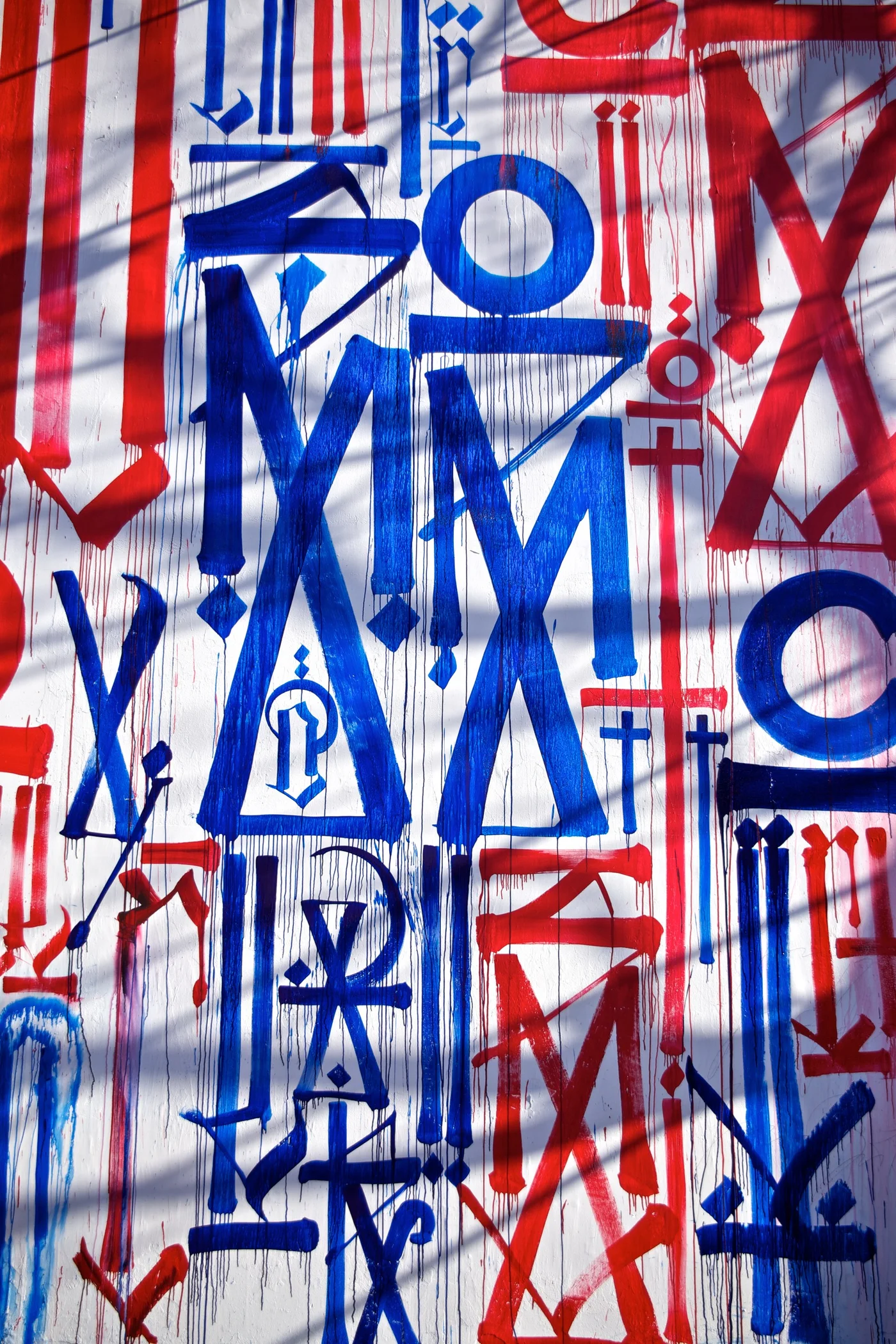
The wall at the corner of Bowery and Houston in Lower Manhattan is one of the most storied canvases in public art. Before RETNA, it hosted Keith Haring, Shepard Fairey, and Os Gemeos. In 2012, the artist added his chapter: a monumental composition of red, blue, and black calligraphic symbols against a white ground. The vertical script rises three stories, its angular strokes and dripping paint evoking both ancient manuscript and futuristic cipher.The composition balances a restrained palette of crimson and navy against the building's white expanse, with shadows from nearby trees casting an ever-shifting second layer across the surface. RETNA's calligraphy — a private lexicon he has cultivated since his earliest days on the streets of Los Angeles — weaves together dedications to those who came before, homages to his MSK collective, and pure formal gesture. The work is not meant to be read literally; it is meant to be felt in passing by the millions who traverse this intersection daily. Though the wall has since been repainted, the 2012 intervention remains a defining moment: a Los Angeles artist claiming his place on New York's most hallowed graffiti wall.